

 2021
2021
 Europe
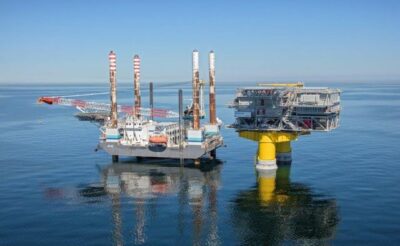
The ‘Combined Grid Solution’ (CGS) is a hybrid system that interconnects the grid of north-eastern Germany with the Danish island of Zealand utilising the grid connection infrastructure of the German offshore wind farms Baltic 1 and 2 and the Danish offshore windfarm Kriegers Flak. It’s the first of its kind worldwide and will be operational before year-end.
Highlights
01
CGS effectively manages fluctuations in intermittent supply and demand.
02
It provides black-start capability by linking Scandinavian and continental grids.
03
CGS aims to foster the European energy transition by strengthening grid integration of renewables and security of supply, especially for the Danish island of Zealand.
04
Early dialogue and public participation accompanied the project systematically from start to finish, achieving high local acceptance.
05
The project can be seen as a starting point for future meshed offshore grids.
Main Information
Due to the short distance between the German ‘Baltic’ wind parks and the Danish ‘Kriegers Flak’ wind parks the idea of creating a system that includes both, offshore wind park feed-in and cross-border interconnection capacity was born. This way, a better utilisation of offshore infrastructure than normal can be reached in the interest of society: when the wind is strong the grid infrastructure is used to transport wind power, when the wind is weak or not blowing at all, it is used to exchange electricity between Germany and Denmark.
What makes the project unique on a global scale is the combination of an interconnector with grid connections of offshore wind, as well as the way the complex hybrid system is going to be operated. A newly developed Master Controller for Interconnector Operation (MIO) with the latest information technology will be installed in the 50Hertz Control Centre in Berlin.
The Master Controller acts as the ‘brain’ of the entire system. It calculates the available capacity of the interconnector (based on wind forecasts and the resulting wind infeed) in real-time, prevents overload by controlling the converter and/or the wind farms, maximises the feed-in from the wind farms through active system control, and controls the exchange of electricity between the grids of both countries by means of the converter installed in Mecklenburg-Western Pomerania (Germany). This way, the cable connection can be utilised to a much higher extend, thus maximising social welfare for society.
The project is based on a partnership between the German transmission system operator (TSO) 50Hertz and the Danish TSO Energinet. This partnership includes the planning phase as well as the future operation of the interconnector, since both, 50Hertz and Energinet own all assets on equal shares. Further project partners, such as ABB and EnBW support the construction of the hybrid interconnector.
Update
In 2021, the Master Controller for Interconnector Operation (MIO) was developed as the first integrated digital tool to enable higher utilisation of offshore infrastructure than usual, since it integrates market signals while having a high focus on integration of renewable energy. It harmonises the requirements of the electricity market and the generation of wind-dependent electricity in the Baltic Sea.
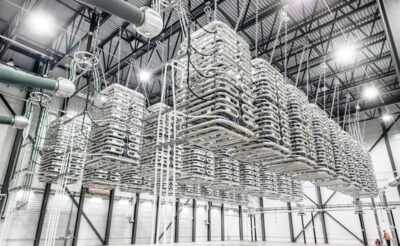
MIO is the “brain” of a complex hybrid energy system that consists of converters, offshore wind farms and cables which are all connected to each other as well as the grids of both Germany and Denmark. Its most important task is the optimal use of this interconnection whilst preventing the line and operating facilities in the substation from overload.
As part of this process, MIO controls the market-based exchange of electricity between Denmark and Germany, not only on the basis of forecasts, but also by ensuring the necessary voltage stability and system balance. It incorporates the complete offshore grid, the wind farms and the converter station, and handles massive amounts of real-time data from different sources, applying it to system operation. Its innovative nature and complexity make it an ideal blueprint for operating offshore grids – even those of bigger scale.


The jury of RGI’s Good Practice of the Year award has selected this practice as one of the winners of the 2019 Edition in the category “Technological Innovation & System Integration”.
Learn more about the RGI Grid Awards in our webpage.
other practices


